Why Wildflowers Need Different Care
Wildflowers aren't like roses or tulips. They're tougher, more independent, but they still need attention. The difference is subtle — it's about understanding what these flowers actually need to thrive in a vase. Most people assume all cut flowers want the same treatment. That's where things go wrong.
A wildflower bouquet can last 10-14 days easily. Sometimes longer if you know what you're doing. We're going to walk you through exactly how to make that happen. No complicated equipment. No special knowledge. Just practical steps that work.
Fresh Water Is Everything
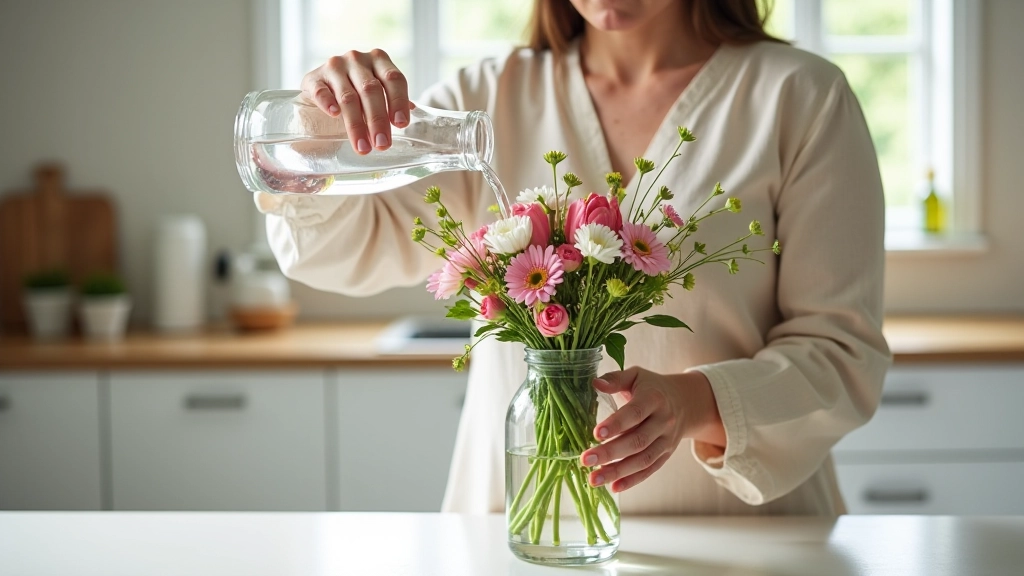
The most important thing? Change the water every 2-3 days. Seriously. This is the one step that makes the biggest difference. Old water gets cloudy, bacteria builds up, and your flowers start to droop. Fresh water keeps them perky.
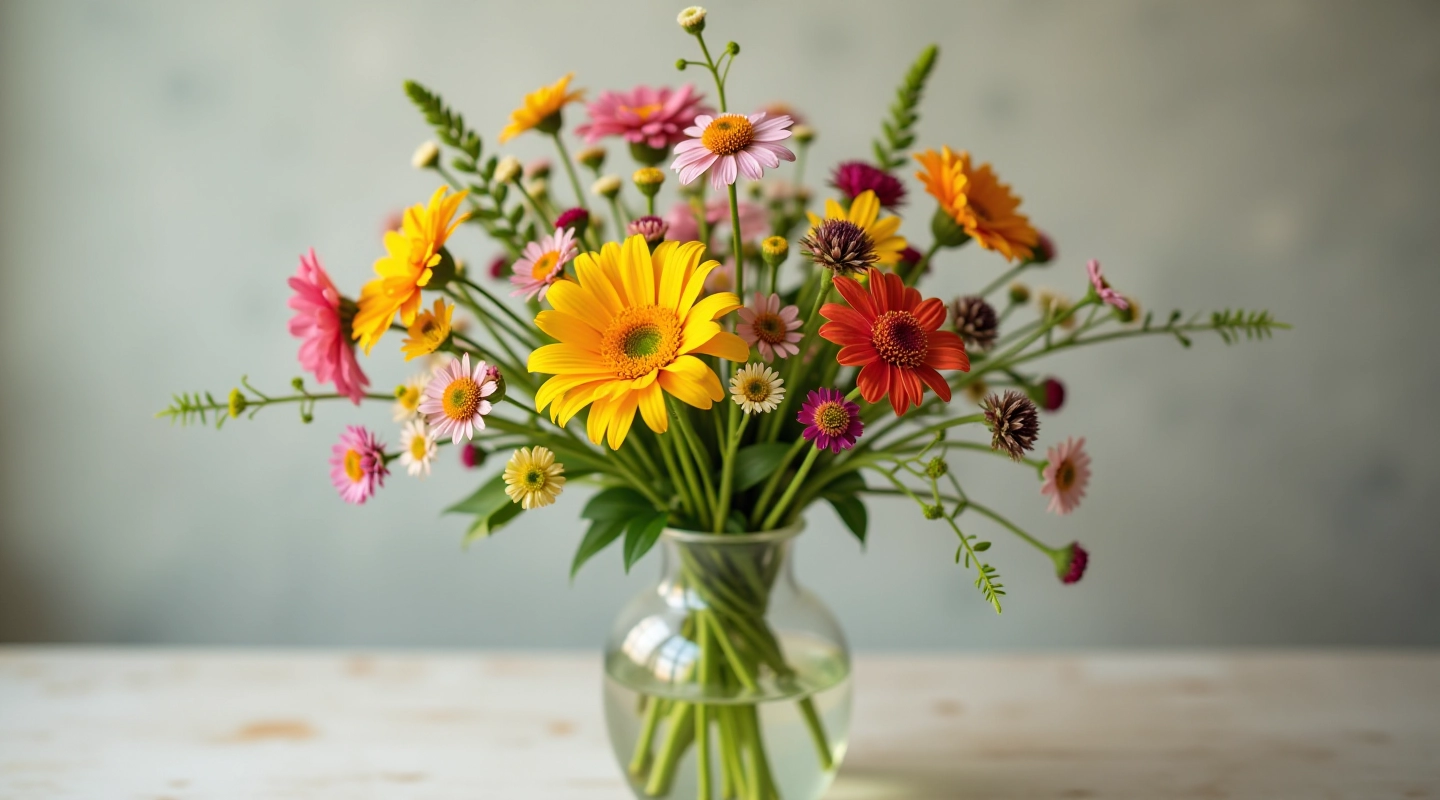
Pro tip: Use room temperature water, not cold. Wildflowers come from warm meadows — they prefer it warm. And always fill the vase three-quarters full. Not to the brim.
When you change the water, that's the perfect time to recut the stems. We'll get to that in a moment. But here's the thing — don't just dump old water and refill. Rinse the vase. Quick rinse. Gets rid of the slime that builds up inside. Takes 30 seconds.
Cutting Stems Properly Matters More Than You'd Think
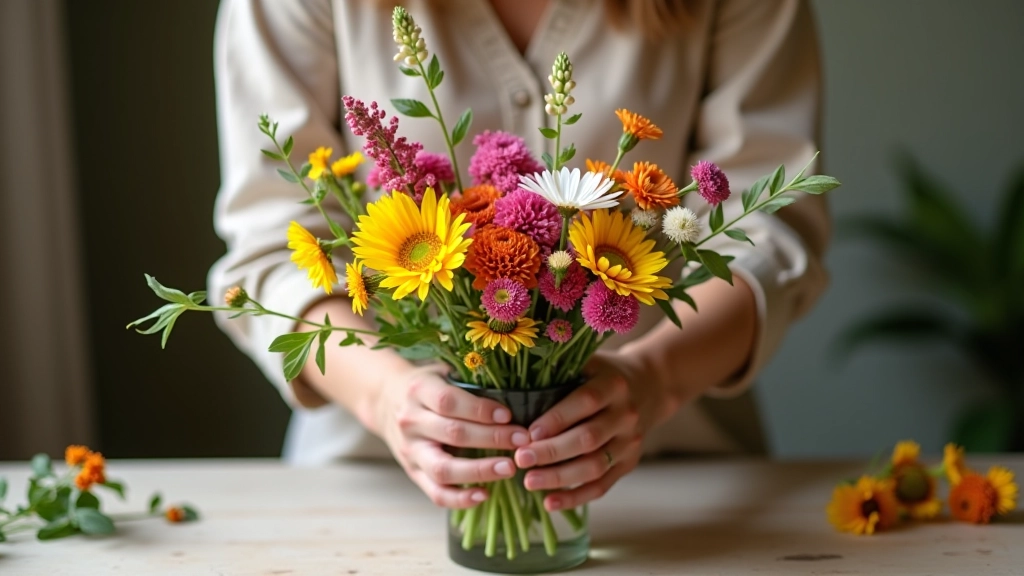
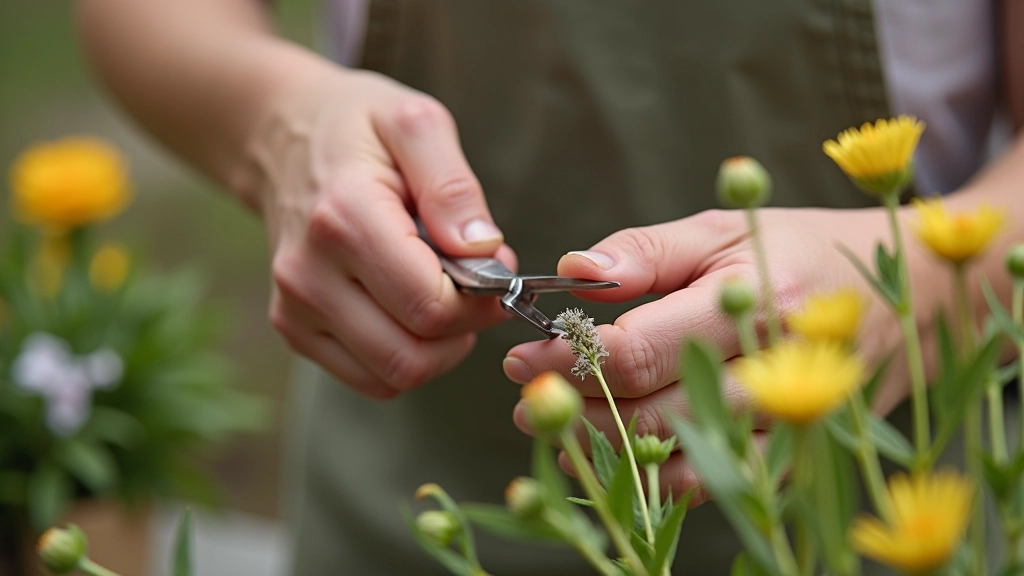
Cut about a quarter inch off the bottom of each stem. That's roughly 6mm. Do it at a 45-degree angle. The angle is important — it creates more surface area for water absorption. Straight cuts actually seal up too quickly.
Use sharp scissors or a knife. Don't use dull scissors — they crush the stem and prevent water from traveling up the flower. If you crush the stem, the flower basically starves. Cut under running water if you can. It prevents air bubbles from forming inside the stem.
Remove any leaves that'd be underwater. Leaves sitting in water rot and create bacteria. Strip them off the bottom 2 inches of the stem. You want only the stem in water, not the leaves.
Location Matters: Where You Put Your Bouquet
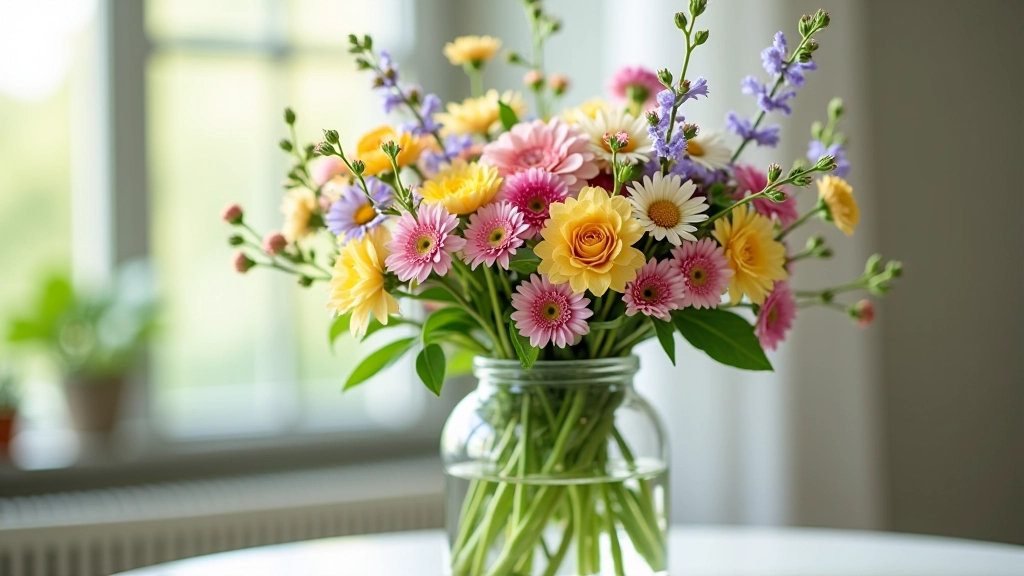
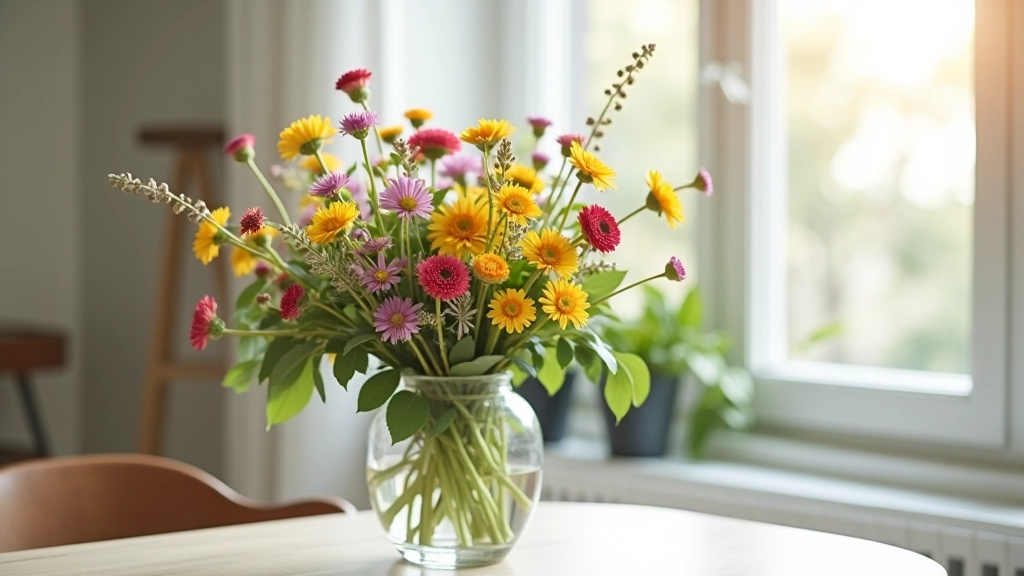
Bright indirect light is perfect. Don't put wildflowers in direct harsh sunlight. They'll fade faster. A spot near a window that doesn't get blasted with afternoon sun? That's ideal. Morning light is fine.
Keep them away from fruit. Fruit releases ethylene gas as it ripens, and that makes flowers age faster. Not dramatically, but it matters over a week. So move that apple bowl to the other side of the kitchen.
Temperature stability helps too. Don't stick your bouquet next to a heating vent or air conditioning duct. Don't put it on a shelf that gets warm from appliances. Room temperature, stable, away from drafts. That's the sweet spot. Most living rooms are perfect.
Small Details That Extend the Life
Add Sugar (Optional)
A teaspoon of sugar in the water gives flowers energy. It's not necessary, but it helps. Some people use flower food packets — those work too. Either way, refresh it when you change the water.
A Drop of Bleach (If You Want)
One tiny drop of bleach per quart of water kills bacteria. Don't overdo it. One drop. It sounds extreme but it actually works. Keeps the water clear and extends the bouquet's life.
Mist the Petals
Wildflowers love humidity. A light mist on the petals a couple times a day keeps them fresh. Use a spray bottle with clean water. Just a light spray, nothing heavy.
Remove Dead Flowers Fast
When a flower starts to fade or droop, take it out. Dead flowers release ethylene gas that ages the rest of the bouquet. Keep the arrangement looking fresh by removing the weak ones.
The Real Secret: Consistency
Here's what people don't realize — it's not about doing one thing perfectly. It's about doing several small things consistently. Fresh water every few days. Stems cut right. Good location. That's it. That's the formula.
Your wildflower bouquet will last 10-14 days with this routine. Some flowers might go longer. Some types fade faster. But follow these steps and you'll get maximum life from your arrangement. And honestly? Watching a bouquet slowly fade over two weeks is part of the beauty. It's natural. But you can stretch that time out significantly with just a little attention.
Start today. Change that water. Recut those stems. Your wildflowers will thank you.
Information Note: This guide is educational and based on general wildflower care practices. Individual flower varieties may have slightly different needs. Results vary based on flower type, water quality, room conditions, and plant health. For specific concerns about your particular bouquet, observe how your flowers respond and adjust watering and placement accordingly. This information is intended to help you care for cut flowers — not as professional horticultural advice.