
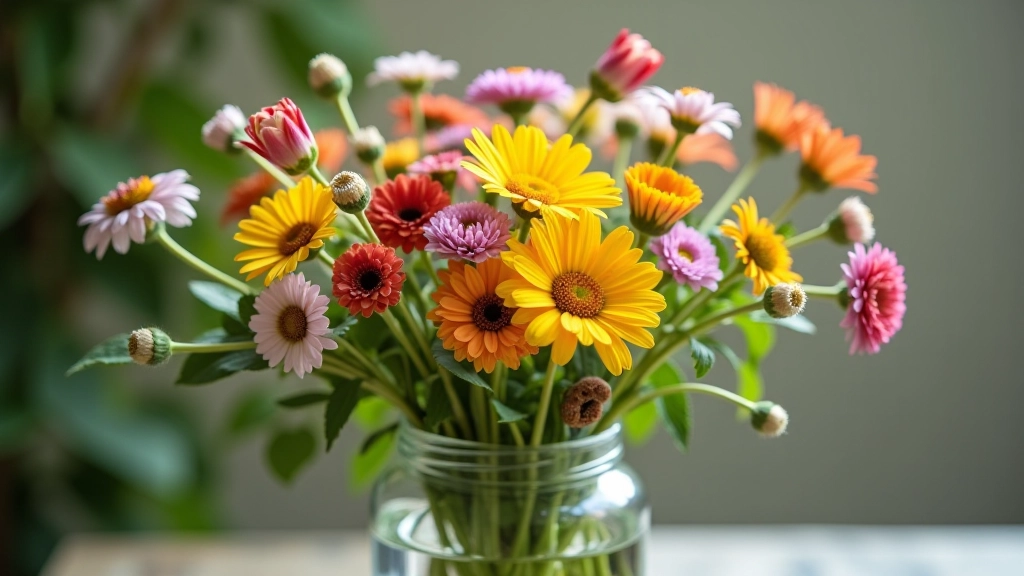
Wildflower Care: Keeping Your Bouquet Fresh Longer
Simple techniques for extending the life of your meadow flowers. We cover water changes, stem care, temperature, and placement tips that keep arrangements looking fresh for days longer.
Learn to create stunning wildflower bouquets with balance, color theory, and natural meadow aesthetics
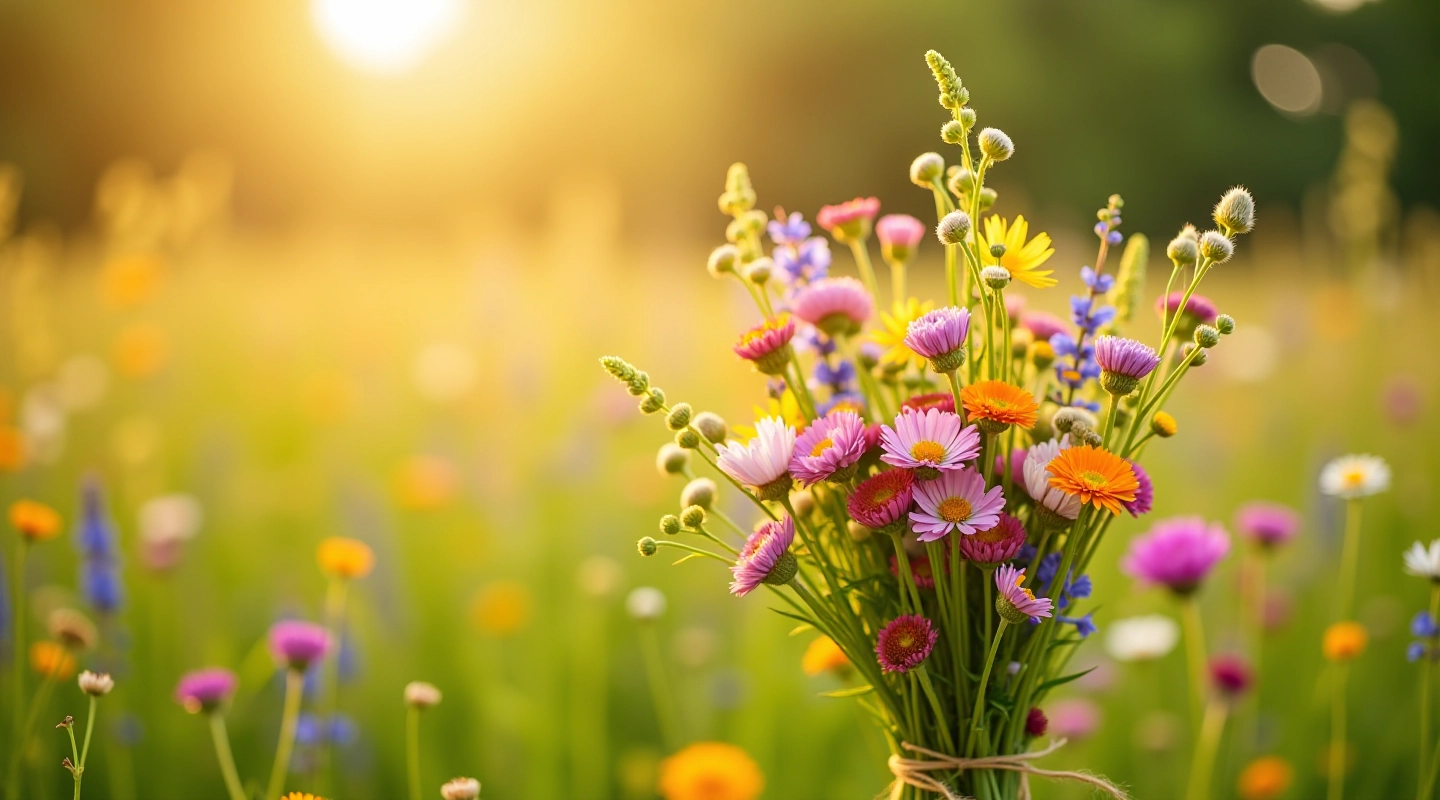
Creating your own wildflower arrangement isn't just about putting stems in water. It's a chance to understand what makes meadows beautiful — the unexpected color combinations, the varied heights, the way some blooms support others. You'll develop an eye for balance that changes how you see gardens forever.
We're going to walk you through the process step by step. Whether you're arranging flowers for your own home or gifting them to someone special, you'll learn practical techniques that produce professional-looking results. The good news? You don't need fancy tools or expensive flowers.
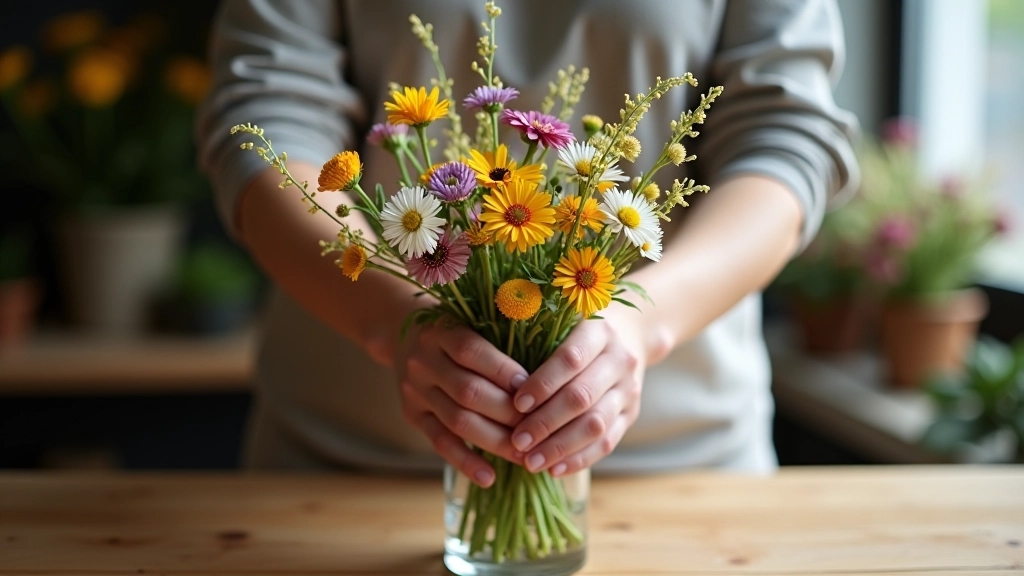
The foundation of any great arrangement is proportion. You'll want your arrangement to be roughly 1.5 times the height of your container. If you're using a 6-inch vase, aim for flowers that reach about 9 inches total height. This creates visual balance that feels natural, not cramped or sparse.
Start with greenery and structural elements first. These are the skeleton of your design. Eucalyptus, grasses, and fern fronds give you a framework to build on. Don't skip this step — it's what professionals do, and it makes the difference between "flowers stuck in a vase" and "an actual arrangement." Add your larger focal flowers next, spacing them so they're not all clustered in the center. Then fill gaps with smaller blooms and fillers.
The rule of odd numbers works well here. Use three main focal flowers rather than two or four. Use five stems of greenery. Groups of three or five feel more dynamic and natural than even numbers. This is one of those design principles that sounds arbitrary until you see it work — then it becomes obvious.
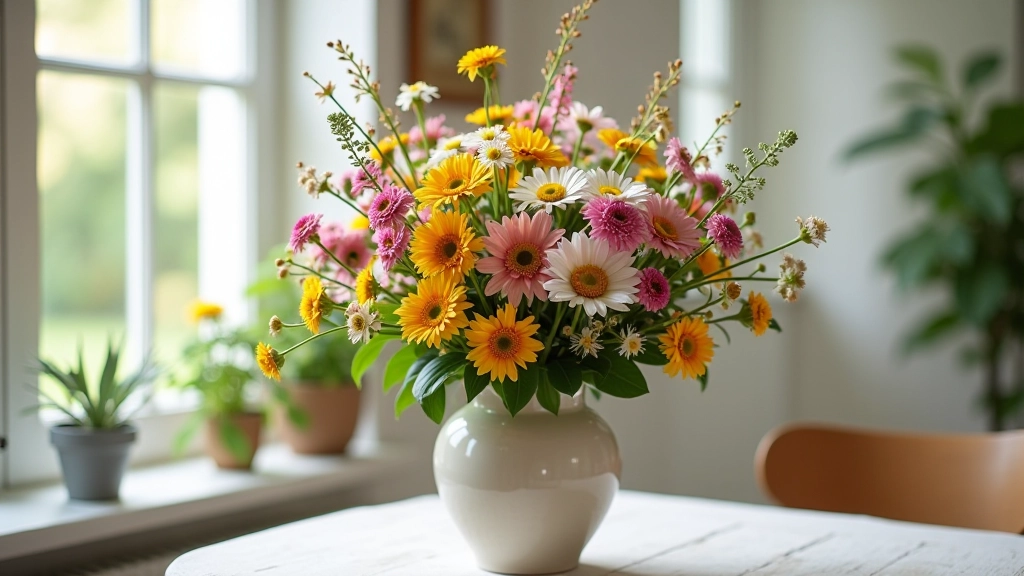
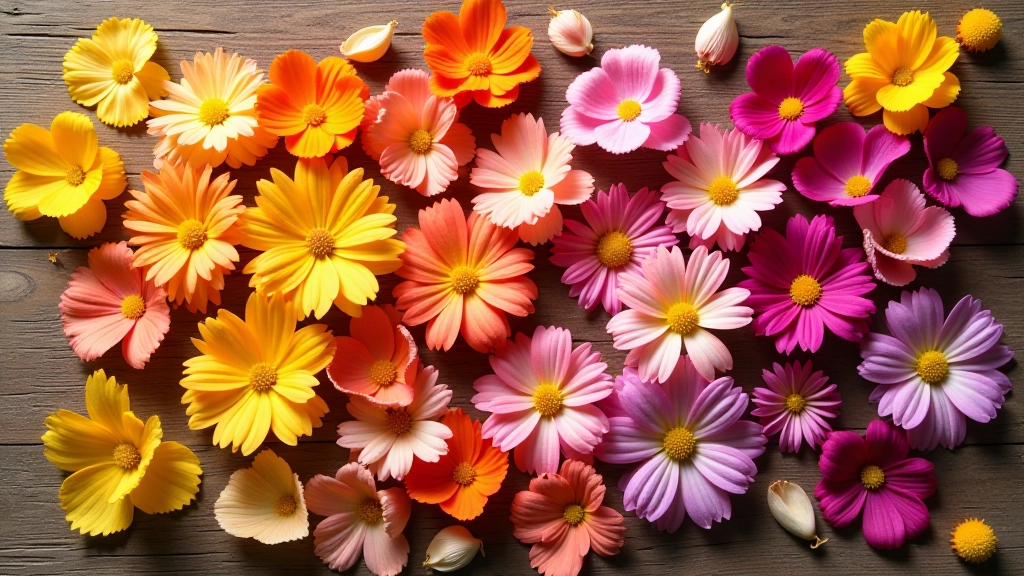
Wildflowers don't follow strict color rules, but they do follow nature's patterns. The most stunning arrangements combine colors that actually appear together in meadows. Think warm yellows with cool purples. Soft pinks with deep burgundies. These aren't random pairings — they're what happens when flowers bloom in the same ecosystem.
You've probably heard of the color wheel, and it's genuinely useful here. Complementary colors (opposite on the wheel) create vibrant contrast. But in meadow arrangements, you'll often use analogous colors too — colors next to each other on the wheel. These create harmony. The trick is using mostly analogous colors with one or two complementary pops for interest. Don't overthink it. Pick flowers you genuinely like, and chances are the colors will work because you're drawing from nature.
One practical tip: introduce white or cream flowers throughout your arrangement. They're not neutral — they're actually separators. White flowers let your eye move between colors without them clashing. It's like adding breathing room to a visual composition.
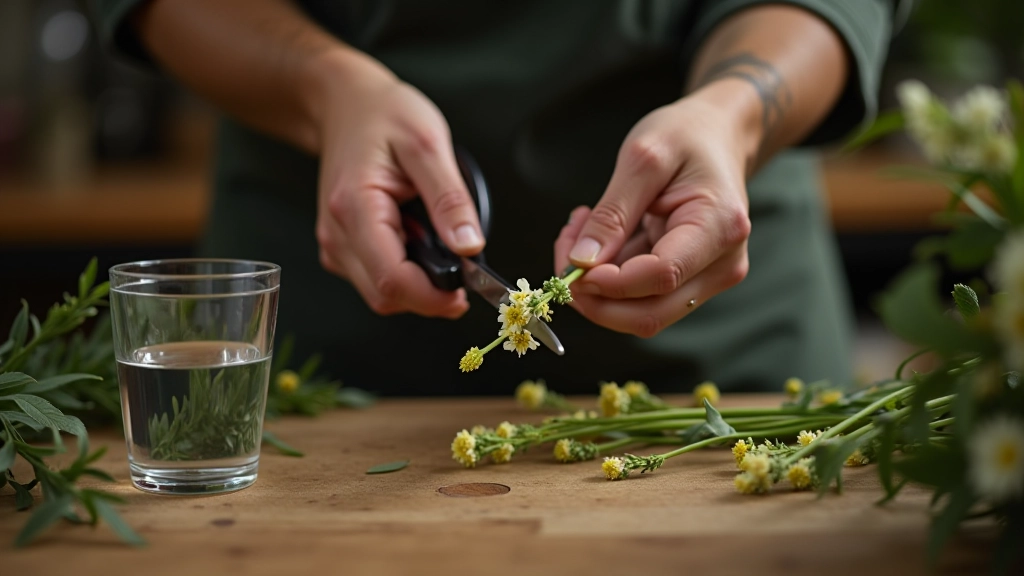
Use sharp scissors or a knife to cut stems at a 45-degree angle. This increases the surface area for water absorption. Cut about 1 inch off the bottom, and repeat every couple days. It sounds small, but it genuinely extends vase life.
Strip all leaves that'd sit below the waterline. Leaves underwater promote bacterial growth. You want the water clear and fresh. This simple step prevents that murky vase water that shows up after a few days.
If you're using floral foam, soak it completely before inserting stems. Insert stems straight down rather than at angles — it creates better water contact. The foam holds stems in place while allowing water to flow freely.
Place some flowers forward and some back. This creates dimension. Meadows aren't flat — flowers are at different depths. Your arrangement should feel three-dimensional, not like a flat bouquet.

Author
Editorial Team
Written by the silvtrade Wildflower editorial team, focused on honest information about wildflower bouquets and seasonal floral arrangements.
Creating your own meadow arrangement is genuinely rewarding. You're learning to see flowers as components of a larger design, understanding how colors interact, and developing hands-on skills that improve with practice. Don't expect perfection on your first try — that's not how design works. What matters is that you're paying attention to proportion, color, and structure.
Start with a simple color palette. Use the odd numbers rule for spacing. Remember that white flowers are your secret weapon for visual harmony. Cut your stems at angles, remove lower leaves, and change the water every two days. These fundamentals will take you from beginner to confident in just a few arrangements.
The best part? Once you understand these principles, you'll see them everywhere — in gardens, in professional florists' work, in nature itself. You're not just learning to arrange flowers. You're learning to see beauty with intention.
Information Disclaimer: This guide provides educational information about wildflower arrangement techniques and design principles. Results vary based on flower types, water quality, temperature, and individual technique. The information here is intended for learning purposes and general guidance. Always follow care instructions specific to the wildflower varieties you're working with, as different species have different requirements.
Simple techniques for extending the life of your meadow flowers. We cover water changes, stem care, temperature, and placement tips that keep arrangements looking fresh for days longer.
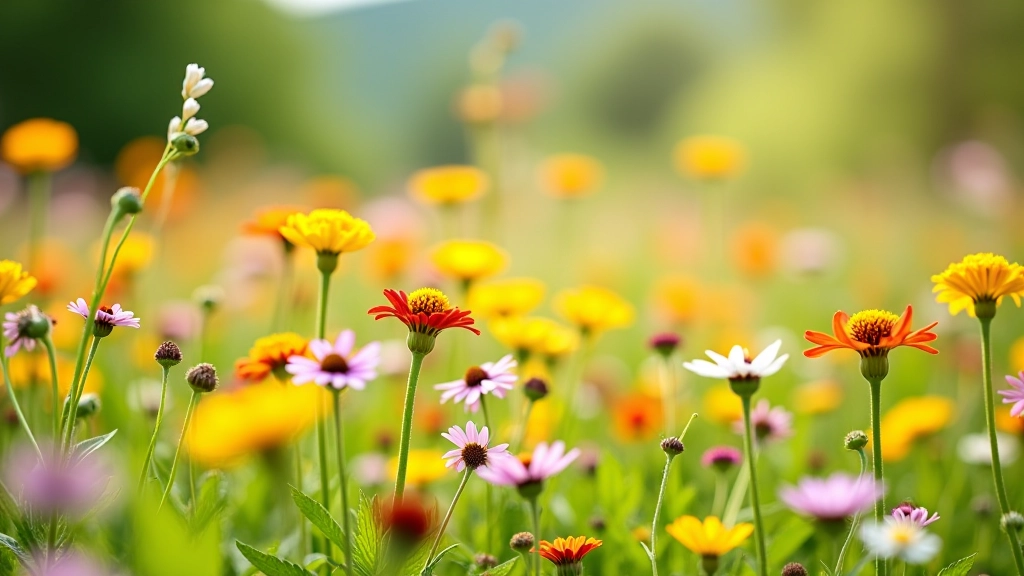
A guide to the wildflowers we're harvesting this summer. Includes information about bloom times, colors, and which varieties work best in arrangements.
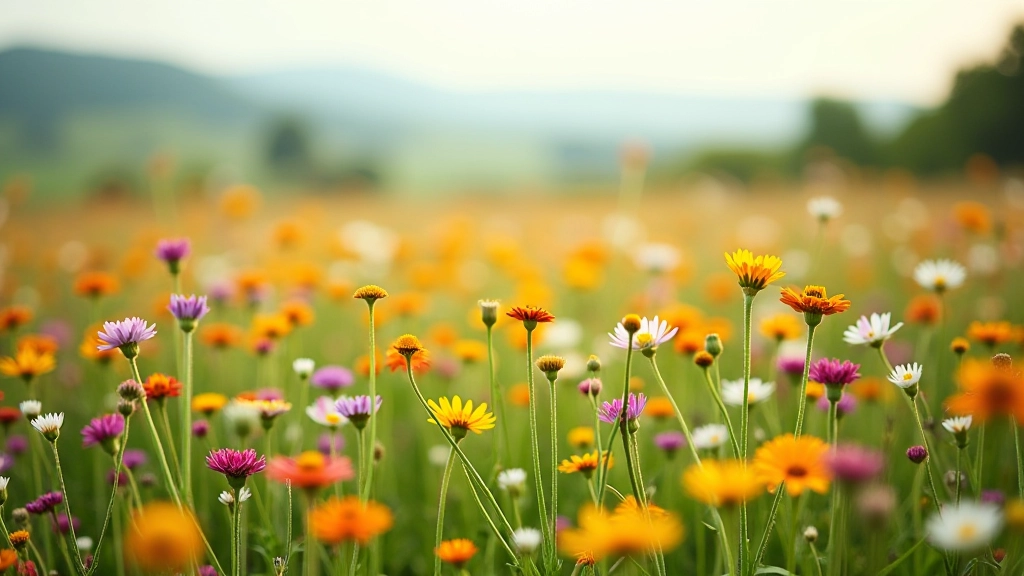
What blooms when in our silvtrade meadows throughout the year. We've mapped out the seasonal rhythm of wildflowers to help you know what's available when.